Tankless
Tankless Water Heater Install Forney TX Essential Steps for Success
Modern tankless water heater units deliver hot water faster than traditional tanks while cutting energy costs up to 40%. The installation requirements differ significantly from standard water heaters. Tank-style units typically need 30K to 50K BTUs, but tankless systems require 160K BTUs. This difference affects gas lines, venting, and electrical requirements.
Proper tankless water heater installation makes the difference between 20+ years of reliable service and costly replacement in just 6-7 years. Forney homeowners increasingly choose tankless systems for clear reasons: better performance and lower operating costs.
Tankless systems heat water on demand, providing unlimited hot water as you use it. Getting these benefits requires proper installation from planning through completion.
This guide covers the essential steps for successful tankless water heater installation:
- Initial preparation and system selection
- Gas versus electric model requirements
- Installation requirements most homeowners miss
- Choosing the right system for your home
- Post-installation maintenance for maximum lifespan
Ready to upgrade your Forney home's water heating? Call 214-973-0457 to discuss your tankless water heater installation with Swift Plumbing's experienced technicians.
Planning Your Tankless Water Heater Installation in Forney TX
Smart preparation prevents installation problems and ensures years of reliable hot water service. Your home's specific requirements determine the right system and installation approach.
Timing Your Water Heater Replacement
Replace your current water heater before it fails. Traditional tank units last 8-12 years with proper maintenance. If your system approaches this age, upgrade now rather than wait for emergency replacement.
Tankless systems provide 15-20 years of service, with properly maintained units lasting over 20 years. This extended lifespan justifies higher upfront costs through:
- Lower long-term replacement expenses
- Reduced emergency repair calls
- Better energy efficiency throughout the unit's life
- Planned installation versus rushed emergency work
Gas Versus Electric: Which System Fits Your Home?
Gas tankless water heaters work best for larger households:
- Higher flow rates for multiple fixtures
- Continue operating during power outages
- Faster heating response times
- Complex installation requirements with proper venting
Electric tankless systems offer simpler installation:
- No venting requirements reduce installation costs
- Compact design fits tight spaces
- Zero emissions operation
- Lower flow rates limit simultaneous fixture use
Your decision depends on household size, utility costs, and existing infrastructure. Forney homes with natural gas service typically benefit from gas units, while homes without gas lines may find electric systems more practical.
Sizing Your System: GPM Requirements
Flow rate determines how much hot water your system delivers simultaneously. Wrong sizing causes either insufficient hot water or wasted money.
Calculate your peak demand by adding fixture requirements:
- Standard shower: 2.5 GPM
- Dishwasher: 2 GPM
- Bathroom faucet: 1.5 GPM
- Kitchen sink: 1.5 GPM
Household sizing guidelines:
- 3.5 GPM handles 1-2 fixtures
- 5 GPM serves 2-3 fixtures
- 7 GPM accommodates 3-4 fixtures
Temperature rise affects capacity. Forney's groundwater (typically 50-57°F) requires heating to your desired output (110-120°F). Winter months may reduce flow rates when incoming water runs colder.
Need help sizing your system? Call 214-973-0457 to discuss your home's specific hot water needs with Swift Plumbing.
Installation Requirements Most Homeowners Miss
Selecting your tankless water heater model represents just the first step. The installation requirements determine whether your system operates efficiently for decades or fails within years.
Gas Line Upgrades: Non-Negotiable Requirements
Your existing gas line cannot handle tankless demands. Traditional water heaters use 30,000-50,000 BTUs. Tankless systems require 140,000 to 199,000 BTUs. This creates specific upgrade requirements:
- Upgrade from ½-inch to ¾-inch or 1-inch gas line
- Professional pressure testing for adequate gas supply
- Proper sizing calculations based on meter distance
- Installation of shut-off valves and sediment traps
Undersized gas lines cause ignition failures, poor performance, and noisy operation. Professional evaluation prevents these problems before installation begins.
Need gas line assessment for your Forney home? Call 214-973-0457 to schedule Swift Plumbing's gas line evaluation.
Venting System Modifications
Tankless units cannot use conventional chimney venting. Direct outdoor venting is required. Critical venting specifications include:
- Proper clearance from windows, doors, and openings per local code
- Category-3 metal piping for standard units (300-400°F exhaust temperatures)
- PVC piping acceptable for condensing units (95% efficiency models)
- Correct slope away from unit preventing condensation damage
Wrong venting materials create safety hazards and code violations.
Electrical Requirements for Gas Units
Gas tankless water heaters still need electricity for controls and ignition. Required electrical specifications:
- Dedicated circuit with no shared appliances
- Proper grounding and surge protection
- Outlet within three feet of the unit
- Appropriate wire gauge for electrical load
These technical requirements demand qualified professionals for safety, efficiency, and code compliance.
Choosing the Right Tankless Water Heater for Your Needs
The right tankless water heater model determines both installation success and years of reliable service. Your choice should match your household's hot water demands with Forney's specific water conditions.
Top brands used in Forney TX: Rinnai and Navien
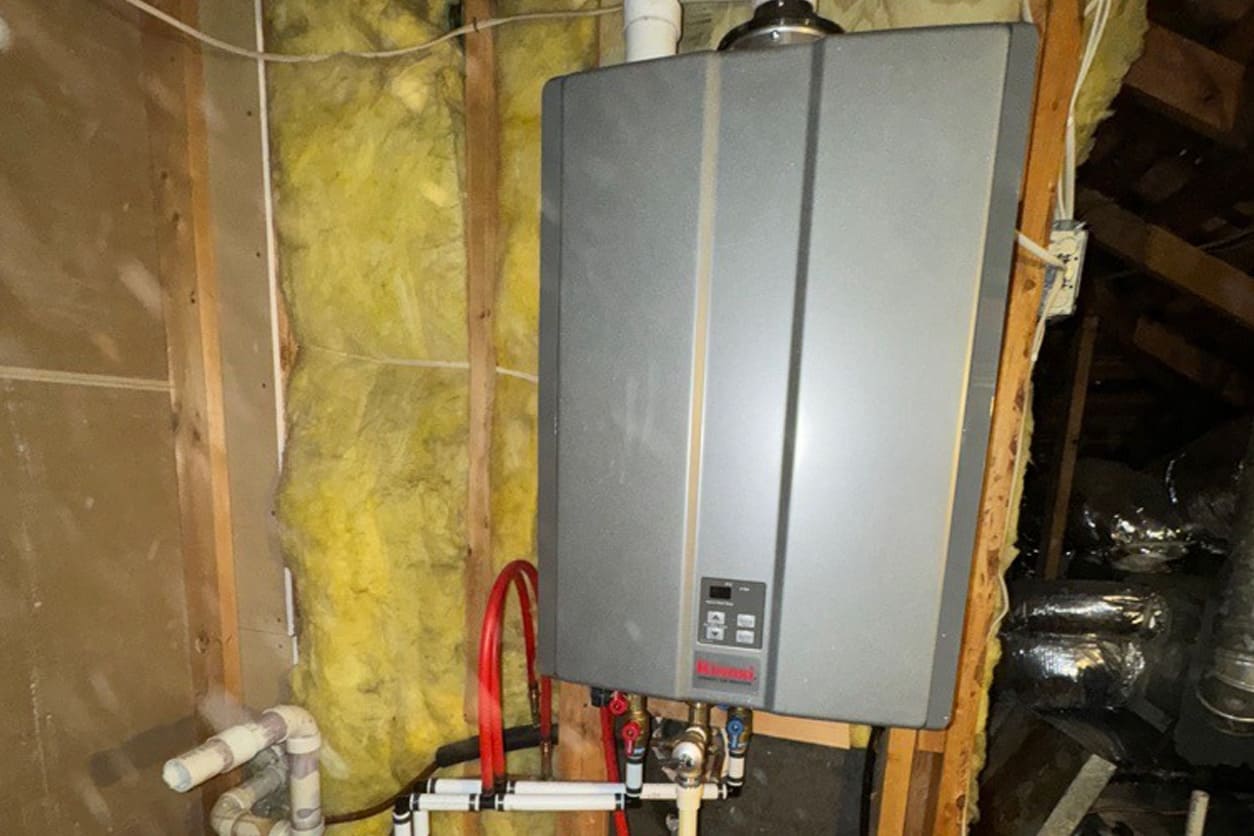
Rinnai leads tankless technology with efficiency ratings from 82% to 98%. Their Sensei™ SE+ Series reaches 0.98 UEF (Uniform Energy Factor) and includes recirculation technology that learns your hot water patterns over a week. Newer Rinnai models automatically adjust between natural gas and propane without conversion kits.
Navien excels with their NPE-A2 Advanced series and ComfortFlow® technology. This eliminates the cold-water sandwich effect through integrated buffer tanks and recirculation pumps. Their EZNav™ control panel makes setup and troubleshooting straightforward.
Point-of-use vs whole-house systems
Point-of-use units serve specific locations like individual bathrooms or kitchens. These compact systems work well for:
- Areas with limited or occasional hot water needs
- Under-sink installations in tight spaces
- Simpler installation with lower costs
Whole-house systems supply multiple fixtures throughout your entire home simultaneously. These require:
- Professional installation due to increased complexity
- Complete assessment of your home's peak water demand
- Proper sizing calculations based on flow rate needs
Tankless gas water heater install vs electric options
Gas tankless systems provide higher flow rates, typically 7-8 GPM, making them ideal for larger households using multiple hot water fixtures at once. Gas units need proper ventilation for exhaust and may require gas line upgrades.
Electric models offer simpler installation without venting but deliver lower flow rates of 3-5 GPM. They suit smaller homes with moderate hot water demands.
Need help selecting the right system for your Forney home? Call 214-973-0457 and talk to Swift Plumbing today for personalized guidance.
Post-Installation: Maintaining Your Investment
Your new tankless water heater installation is complete. Now focus on the steps that protect your investment and ensure twenty years of reliable service.
System registration and warranty protection
Register your unit within 30 days through the manufacturer's website or mail-in form. This protects your warranty coverage and streamlines future service calls. Most manufacturers provide tiered coverage: 12 years on heat exchangers, 5 years on components, and 1 year on labor.
Skip this step and you risk voiding warranty protection when problems arise.
Descaling schedule for Forney water conditions
Forney's water hardness often exceeds 7 grains per gallon, causing scale buildup faster than softer water areas. Schedule annual descaling as your minimum maintenance requirement. Homes with extremely hard water need descaling every six months.
The descaling process requires basic supplies:
- Distilled white vinegar
- Submersible pump
- Connection hoses
- Five-gallon bucket
This preventive step extends your system's life and maintains peak performance.
Recirculation systems for instant hot water
Stop waiting for hot water with a recirculation pump installation. Advanced systems like Rinnai's Smart-Circ™ learn your usage patterns over time. Retrofit options work with existing plumbing by using cold water lines as return paths.
Warning signs requiring immediate attention
Call 214-973-0457 immediately when you notice these issues:
- Sudden water pressure drops
- Lukewarm water instead of hot
- Unusual noises from the unit
- Repeated system shutdowns
- Changes in water quality
Early attention prevents minor issues from becoming major repairs. Swift Plumbing's technicians diagnose problems quickly and provide clear options before starting any work.
Need help with tankless water heater maintenance? Schedule your service visit today.
Get Your Tankless Water Heater Installation Right the First Time
Tankless water heater installation requires careful planning and professional expertise to deliver the energy savings and reliable performance you expect. The right system choice, proper installation, and ongoing maintenance determine whether you enjoy decades of unlimited hot water or face premature replacement costs.
Your home's specific requirements—from gas line capacity to water hardness levels—affect both system selection and installation complexity. Professional assessment prevents costly oversights that many homeowners discover only after installation problems arise.
Quality installation pays for itself through improved efficiency, extended equipment life, and trouble-free operation. When your current water heater shows signs of age or when you're ready to upgrade to endless hot water, professional guidance ensures you make the right choice for your specific situation.
Ready to discuss tankless water heater installation for your Forney home? Call 214-973-0457 to schedule your consultation with Swift Plumbing. Our experienced technicians will assess your home's requirements, explain your options clearly, and handle the complete installation process with the care your investment deserves.
Serving Forney and surrounding East Dallas suburbs with upfront pricing and neighbor-level honesty you can trust.
Quality workmanship done right the first time

FAQs about Tankless
What are the key steps in installing a tankless water heater?
The main steps include upgrading the gas line, mounting the unit, installing new water lines, setting up the pressure relief valve, installing the exhaust vent, and connecting the electrical components. It's crucial to ensure proper gas line sizing and venting for optimal performance and safety.
How much does a tankless water heater installation typically cost in Texas?
In Texas, the cost for purchasing and installing a residential tankless water heater generally ranges from $6,000 to $12,000. The majority of this cost is attributed to labor, with additional factors including product selection, gas line upgrades, and necessary venting and drainage modifications.
What should be done before installing a tankless water heater?
Before installation, it's essential to prepare the gas line, choose an appropriate location for mounting the unit, and ensure you have the necessary tools and materials. It's also important to consider your home's specific needs, such as water demand and existing infrastructure, to select the right model.
How long does the installation of a tankless water heater usually take?
The installation of a tankless water heater typically takes between 4 to 8 hours. However, this can vary depending on the complexity of the installation, the specific model being installed, and any necessary modifications to your home's existing systems.
What maintenance is required for a tankless water heater after installation?
Regular maintenance includes annual descaling (or more frequently in areas with hard water), checking for any unusual noises or performance issues, and ensuring proper venting. It's also important to register your unit for warranty purposes and consider using a recirculation pump for improved efficiency.